
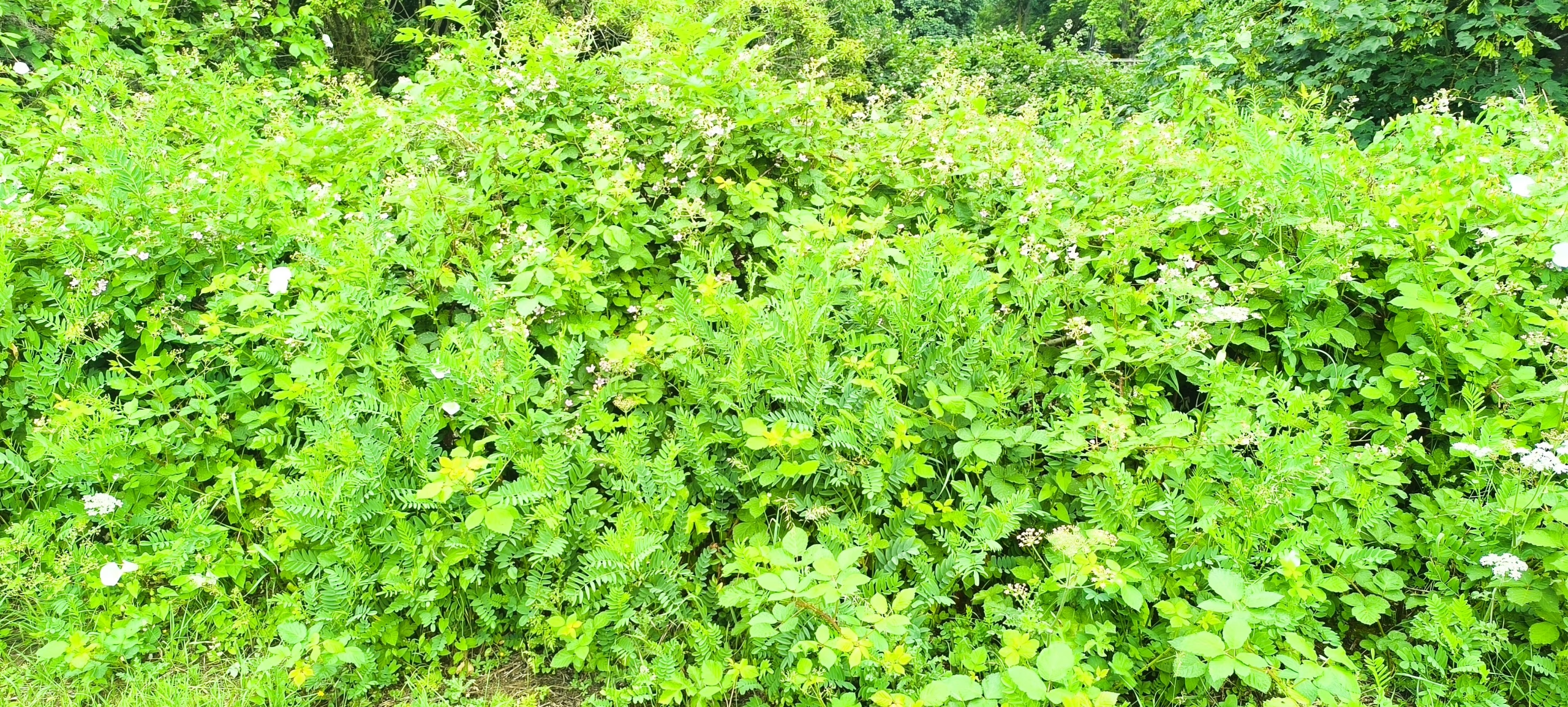
On Sunday 7 June 2024, LBCV will be doing invasive species management on Walthamstow Marshes(SSSI). We will be removing goat’s rue from the Aqueduct Path area. Meet at the Waterworks Centre, Lammas Road E10 7QT, from 9:30am for 10am to collect tools etc
Conservation Task Details
Walthamstow Marsh is a Site of Special Scientific Interest (SSSI, pronounced “triple S, I”) declared under the 1981 Wildlife and Countryside Act. Covering 55.4 Hectares (136.9 acres), it is part of a Green Flag Awarded Nature Reserve that also includes Coppermill Fields and Leyton Marsh.
This Nature Reserve is a remnant of London’s once widespread river valley grasslands and is especially important for its plant and insect life containing a national rarity in creeping marshwort along with long-stalked orache, black poplar, brookweed, penny-royal, water voles, bats; soldier-flies, snail-killing flies, orthoptera, reed bunting, linnet and song thrush.
The marshes are former Lammas lands, meaning commoners had rights to graze there from 12 August to 6 April.The task will help the rangers control and protect the marshes from invasive plant species. We will have a chance to explore the SSSI nature reserve.
Goat’s rue is such an invasive plant, that for several years LBCV was devoting a whole summer task to pulling on South Marsh. Any goat’s rue now on South Marsh is dealt with by pulling on a walk through, so we are confident we are making a difference. It has also been eradicated, by us, from North Marsh and hence we are now concentrating on the final few plants on Aqueduct path.
Goat’s rue is so called as it was given to nanny goats to increase their milk yield but it was found to be toxic to ruminants with the potential to induce a build-up of excess fluid in the lungs, low blood pressure, paralysis and death.
How is it invasive ?
It is a non-native hardy perennial that forms dense crowns, each plant can produce over 15,000 seeds that remain viable for 10 to possibly 26 years.
Why remove ?
Walthamstow Marshes are under Higher Level Stewardship in that they are being grazed by traditional bred cattle, so having goat’s rue growing where cattle are grazed is not ideal and the area is also surround by bridle paths so there is a need to control the goat’s rue in these areas.